Why Aviation Is One of the Most Powerful STEM Classrooms in America
When people think of STEM education, they picture robotics kits, coding clubs, and science fairs. Rarely do they picture a twelve-year-old in the left seat of a real aircraft, applying physics, mathematics, meteorology, and engineering in real time. But that is exactly what aviation education isand why it works so well.
At Kids in Aviation, we see every day how flight training delivers genuine STEM learning, exposes young people to real careers, and opens doors for students who would never otherwise reach the cockpit. This article breaks down how those four pieces, STEM education, workforce development, career exposure, and access, fit together, and why they matter for Arizona families right now.
Aviation Is Applied STEM
Aviation is not a metaphor for STEM. It is STEM, applied under real conditions with real consequences.
Consider what a student learns during a single Discovery Flight and the ground school that surrounds it:
- Physics: The four forces of flight, lift, drag, thrust, and weight, are not abstract. A student feels them the moment they pull back on the yoke and the nose rises.
- Mathematics: Navigation, fuel calculations, weight and balance, and time-speed-distance problems are real, not textbook exercises.
- Earth Science: Weather interpretation, density altitude, and wind correction are earth science in motion.
- Engineering & Technology: Aircraft systems, avionics, piston and turbine engines, and ballistic parachute systems are hands-on engineering.
Research on experiential learning consistently shows that students who apply academic concepts in real-world settings retain more, understand more deeply, and stay more motivated in STEM fields. Aviation may be the purest example of applied STEM available to K-12 students, because the science is not demonstrated, it is used.
Workforce Development Starts Early
The United States faces a sustained aviation workforce shortfall. Industry forecasts call for roughly 12,000+ new pilots annually through the early 2030s just to maintain current operations, and that does not account for the parallel need for aircraft mechanics, air traffic controllers, avionics technicians, and aerospace engineers.
The pipeline that fills those roles does not begin in college. It begins in childhood, when a young person first imagines that the sky is a place they could belong. Programs that introduce aviation early do not just inspire, they build the technical foundation, the safety culture, and the professional habits that the industry needs.
A student who begins flight training at age 11 or 12 can hold a Student Pilot Certificate at 14, a Private Pilot Certificate at 17, and enter regional aviation pathways by 18 or 19. That is a three-to-five year head start over peers who first consider aviation in college. In a competitive, high-demand field, that head start is enormous.
But workforce development is not only about pilots. Through airplane maintenance classes, tower tours, and exposure to the broader aviation ecosystem, students discover roles they never knew existed, roles that are well-paid, in demand, and accessible through focused training rather than a four-year degree.
Career Exposure That Textbooks Cannot Provide
Most young people never meet a pilot, a mechanic, or an air traffic controller. Their understanding of aviation careers comes from movies, which is to say, from fiction. That changes the moment they step onto a working airfield.
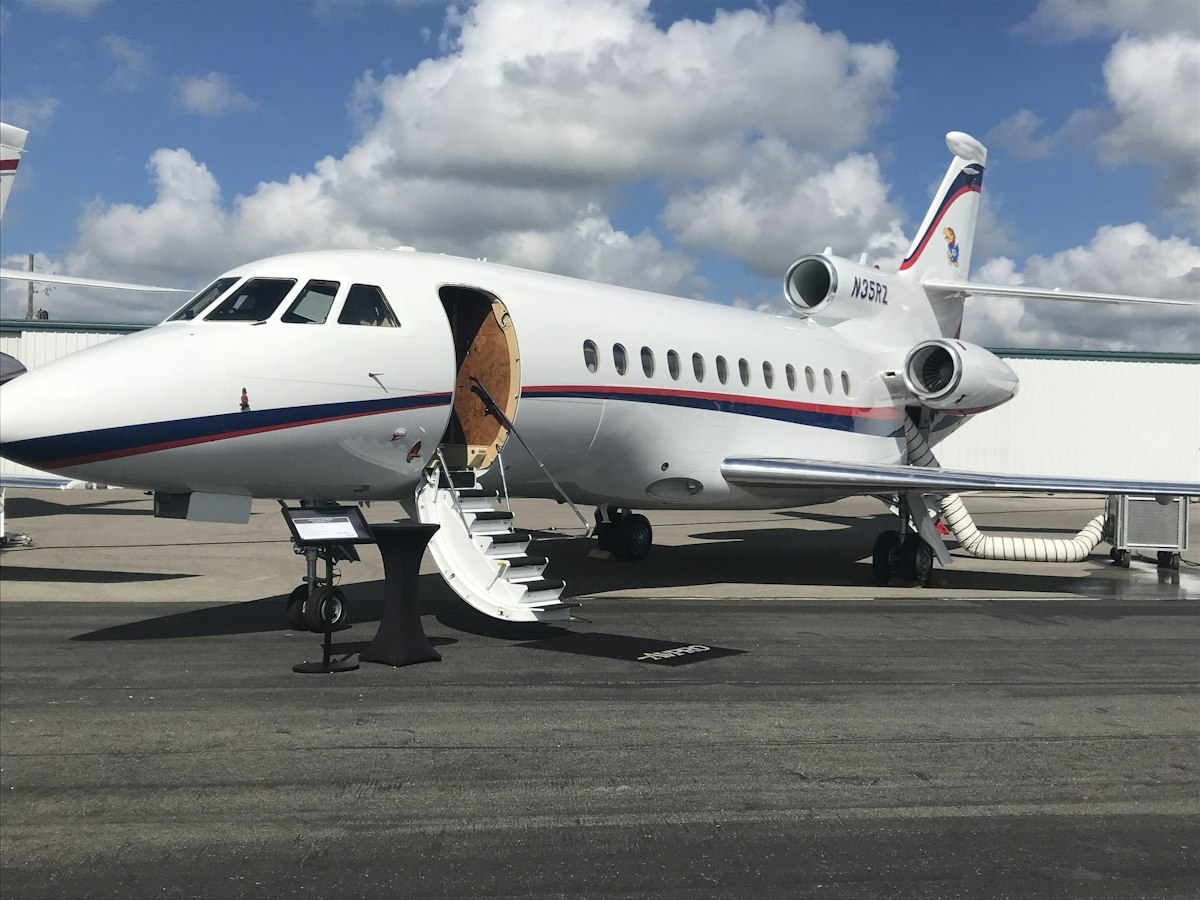
At Falcon Field, students share the ramp with corporate jets, helicopter operations, and Boeing's attack helicopter division. They meet FAA-certified flight instructors who chose to teach. They tour the control tower and talk to the controllers managing real traffic. They walk through an active maintenance hangar and see mechanics rebuilding real aircraft.
This kind of exposure does two things. First, it demystifies careers that feel out of reach. A teenager who has shaken hands with a CFI and sat in a real cockpit no longer sees "pilot" as something other people do. Second, it reveals the full spectrum of aviation careers, not just airline captain, but mechanic, controller, dispatcher, safety inspector, aerospace engineer, and more.
Career exposure works best when it is concrete and repeated. A single field trip can plant a seed. Sustained engagement, through classes, mentorship, and repeated flights, grows it into a genuine plan.
Access: The Problem and the Solution
For most of its history, aviation has been inaccessible to most families. Flight training is expensive. The community is insular. Programs designed for children, when they exist at all, have often been costly, inflexible, or built for a narrow range of learning styles.
That inaccessibility is not just a fairness problem. It is a workforce problem. When the talent pool is limited to families who can afford it and who already have aviation connections, the industry loses enormous numbers of capable future pilots and technicians. Expanding access is not charity. It is how the pipeline gets fixed.
Kids in Aviation was built specifically to address access. Three commitments make that real:
- Arizona ESA approval. State education funds can pay for Discovery Flights, classes, summer camp, and flight lessons. ESA accounts typically range from $5,000 to $15,000+ per year, enough to fund a full season of aviation education.
- NextGen Pilots 501(c)(3) scholarships. For families without ESA funds or the ability to pay, scholarship support removes the financial barrier entirely. Rolling applications, two-week decisions, and funds paid directly to the flight school.
- Low-cost entry points. A $50/month Pilots Lounge membership and $300 Discovery Flights make a first taste of aviation achievable for nearly any family.
Access also means learning-style access. The mastery-based, hands-on nature of flight instruction works for neurodivergent learners who struggle in traditional classrooms. A program designed for diverse brains is not a side offering here, it is the core design.
How the Four Pieces Connect
STEM education, workforce development, career exposure, and access are not separate goals. They reinforce each other:
- STEM gives students the academic foundation and the confidence that they can do hard, technical things.
- Workforce development connects that foundation to real, in-demand, well-paid careers.
- Career exposure shows students those careers exist and that they belong in them.
- Access ensures that none of it is reserved for a narrow few.
When all four are present, a young person does not just learn about aviation. They see a path from curiosity to capability to career, and they believe that path is open to them.
What This Looks Like at Kids in Aviation
Every program we offer is built with these four pillars in mind. A Discovery Flight is STEM in action and a first taste of a career. Ground school classes cover aerodynamics, jet engines, and emergency decision-making. The Airplane Maintenance Class, where students rebuild a real Mooney M20, is mechanical engineering and a direct window into a high-demand trade. Summer camp spans rocketry, drones, maintenance, and air traffic control. Path to Pilot turns early exposure into a structured journey toward certification.
And every one of those programs is open to ESA families and scholarship recipients, because access is not an afterthought. It is the starting point.
Why This Matters Right Now
The students sitting in our classrooms today are the pilots, mechanics, and engineers of the 2030s and 2040s. Whether the aviation industry can meet its future needs depends on whether those young people ever get the chance to discover that aviation is for them.
That chance should not depend on family income, neighborhood, or learning style. It should depend only on curiosity and willingness to learn. When it does, the pipeline fills with capable, motivated people, and a generation of young people discovers what they are capable of.
Want to see how aviation opens doors for your child?
Start with a Discovery Flight. One hour, real STEM learning, and the first step on a path that could lead anywhere. Ages 7 and up, no experience required. ESA funds and scholarships accepted.